Ennakko
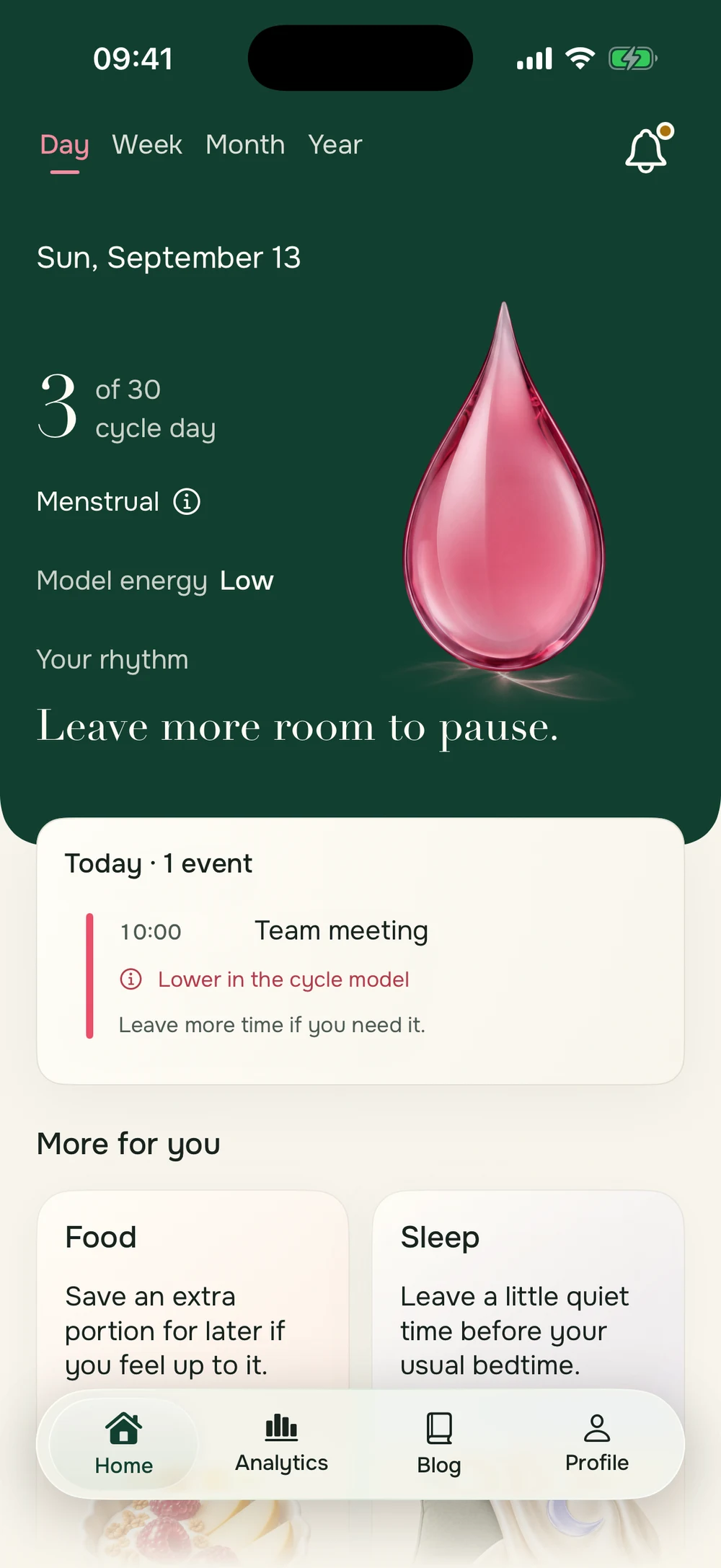
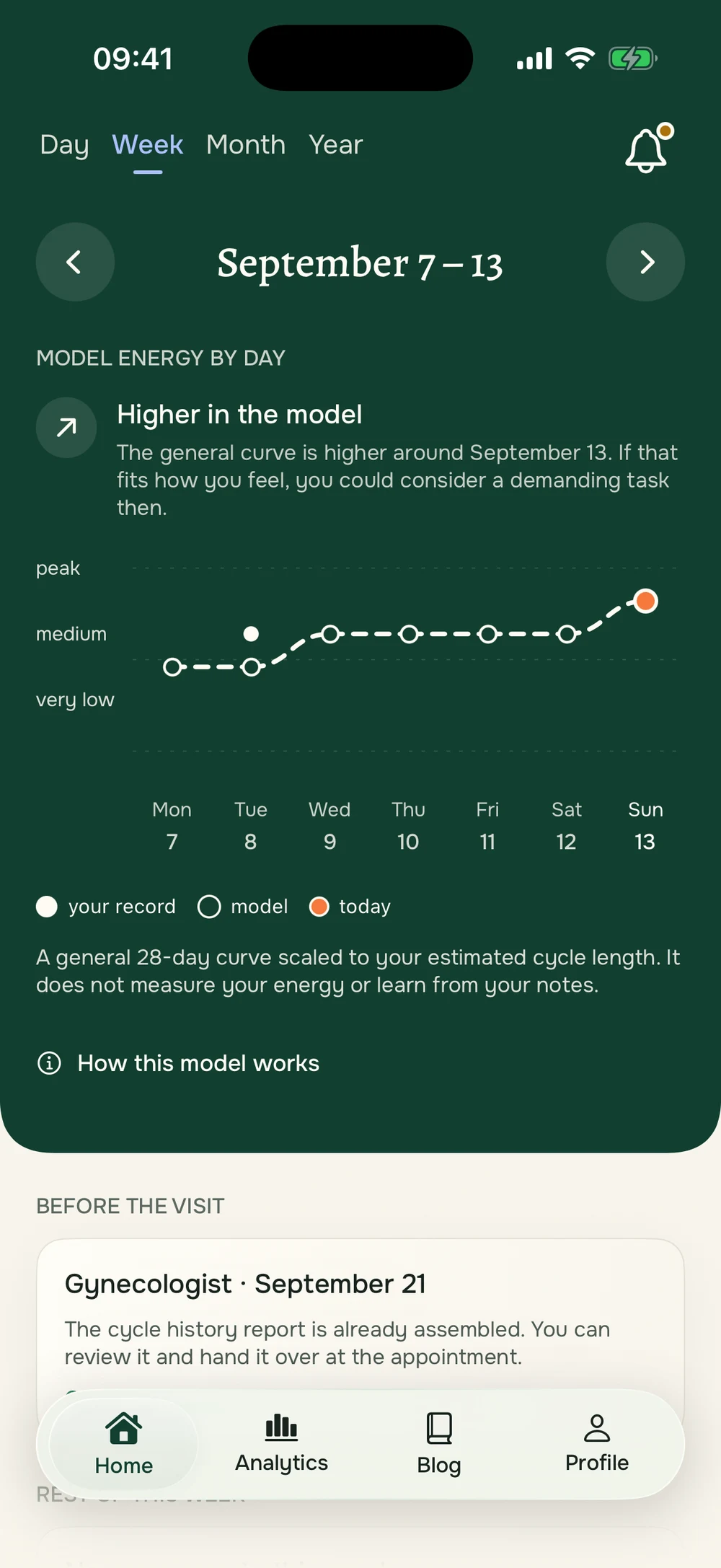
Turns cycle patterns into planning cues without daily tracking or false certainty.
Soon on the App Store




Research framed the product risks
I tested assumptions around planning value, recurring effort, privacy, trust and willingness to pay before choosing what the first version had to prove.
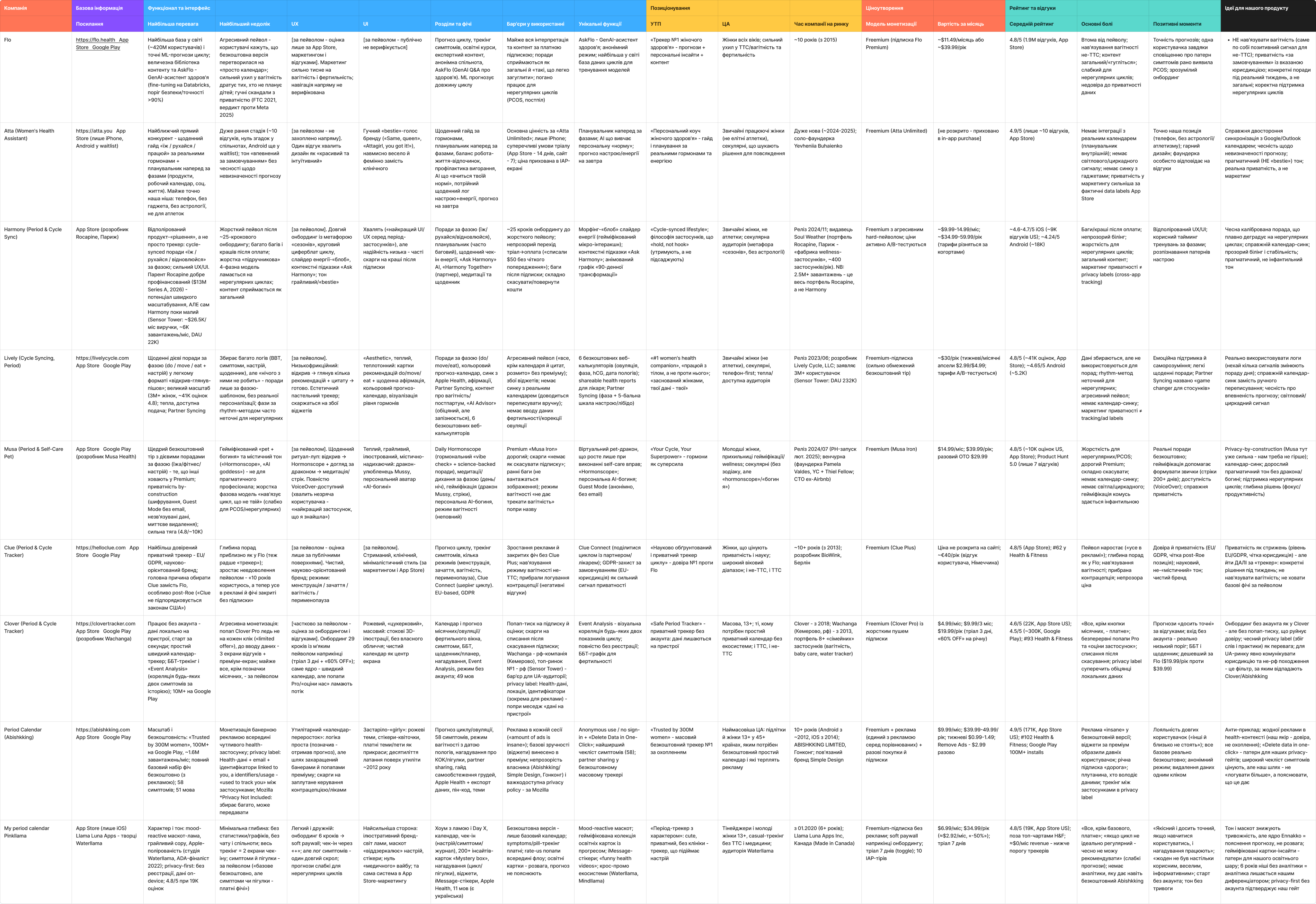
- 9-product benchmark
Mapped trackers and newer cycle-guidance products across input, paywalls, privacy and advice.
- 20+ interviews
Used concrete situations and abandoned habits to separate supported needs from contradictions.
The benchmark became three constraints
The first version had to make guidance contextual, show value before commitment and meet privacy expectations without a separate Ennakko account.
Evidence narrowed the scope
The scope held to planning value, low recurring effort and visible model limits.
Planning already existed
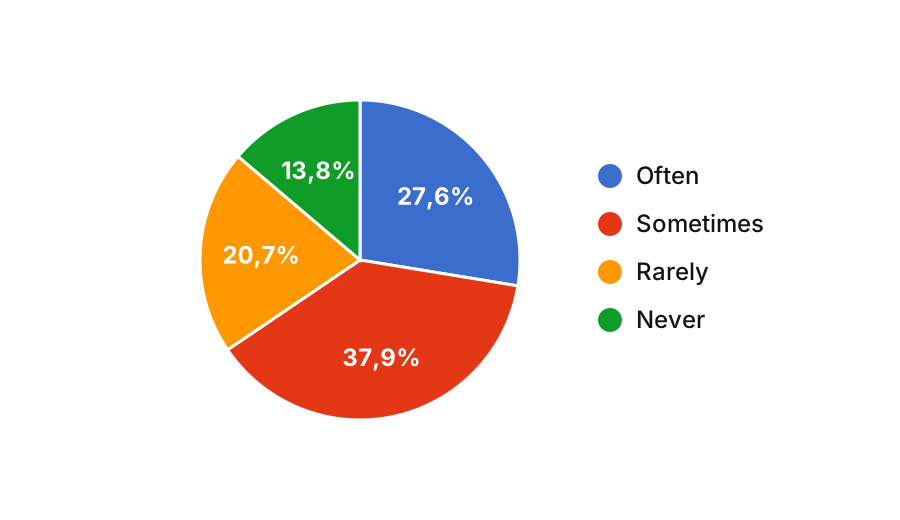
When asked about the previous three months, 65.5% had often or sometimes changed a real decision because of their cycle.
Daily logging broke down
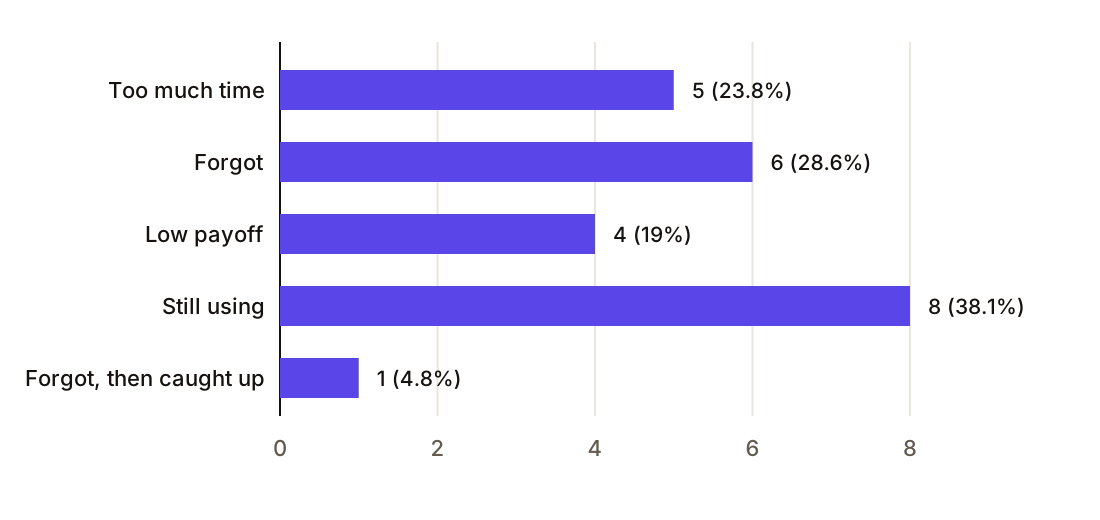
The follow-up on abandoned tracking pointed to forgetting, time and low payoff rather than one single dropout reason.
Advice needed context
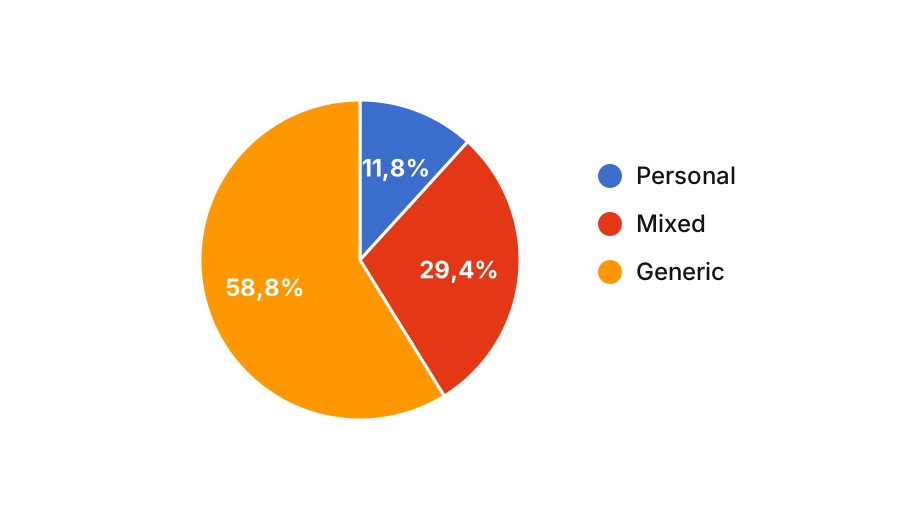
Advice was the weakest signal: 58.8% called it generic, so the product needed personal patterns and clear model limits.
Two contexts replaced one generic user
Personas, JTBD and journey maps translated the same research into preparation and retrospective understanding.
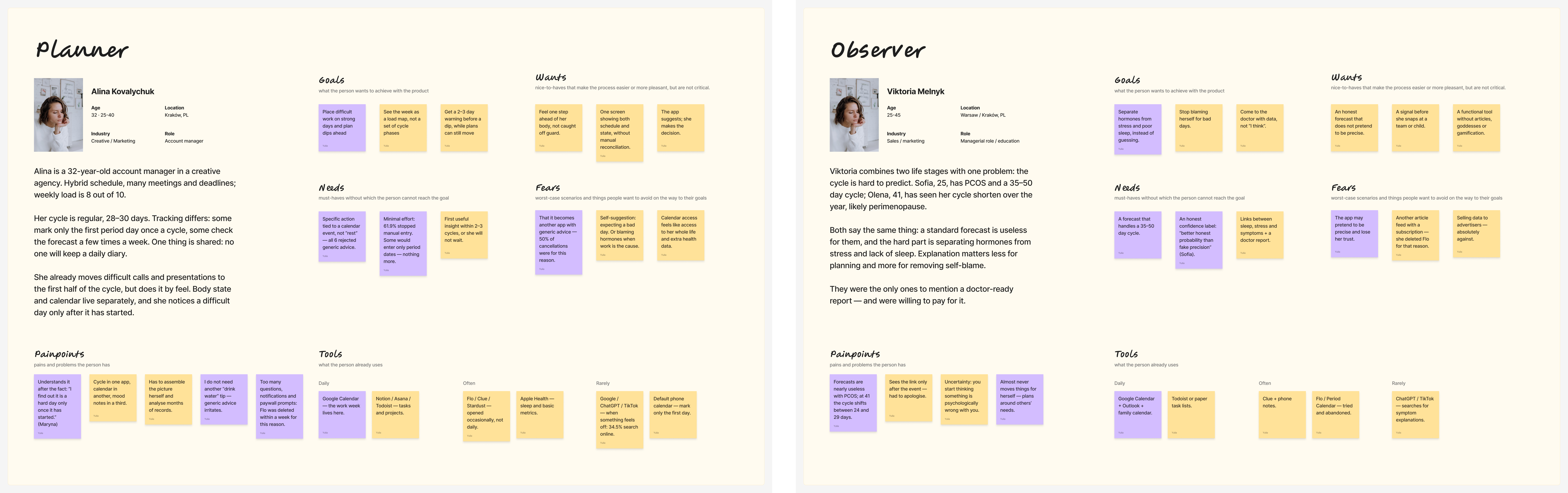
Persona
Planner and Observer separated preparation needs from retrospective understanding.
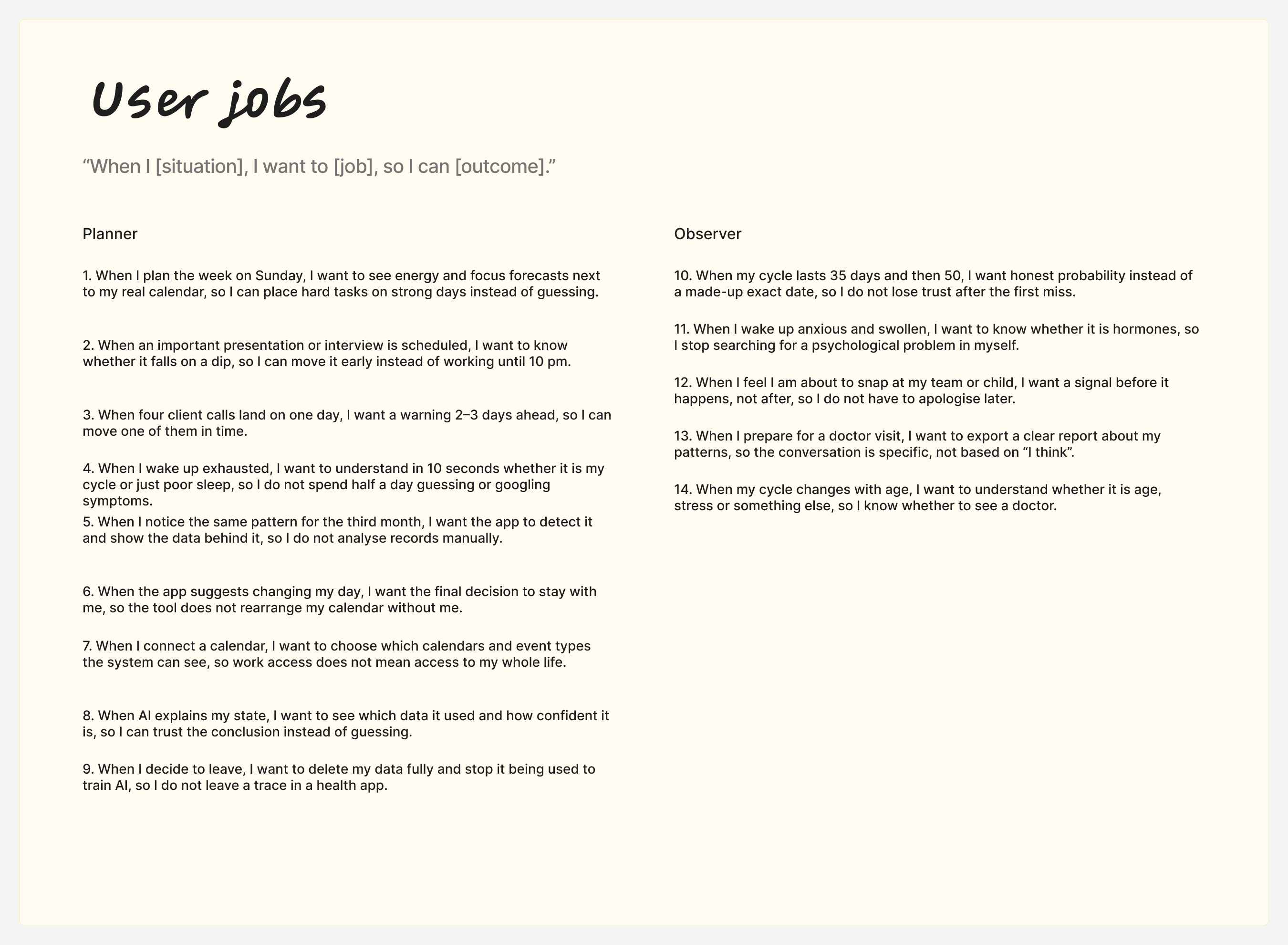
JTBD
Help me translate cycle patterns into decisions without taking control of my schedule.
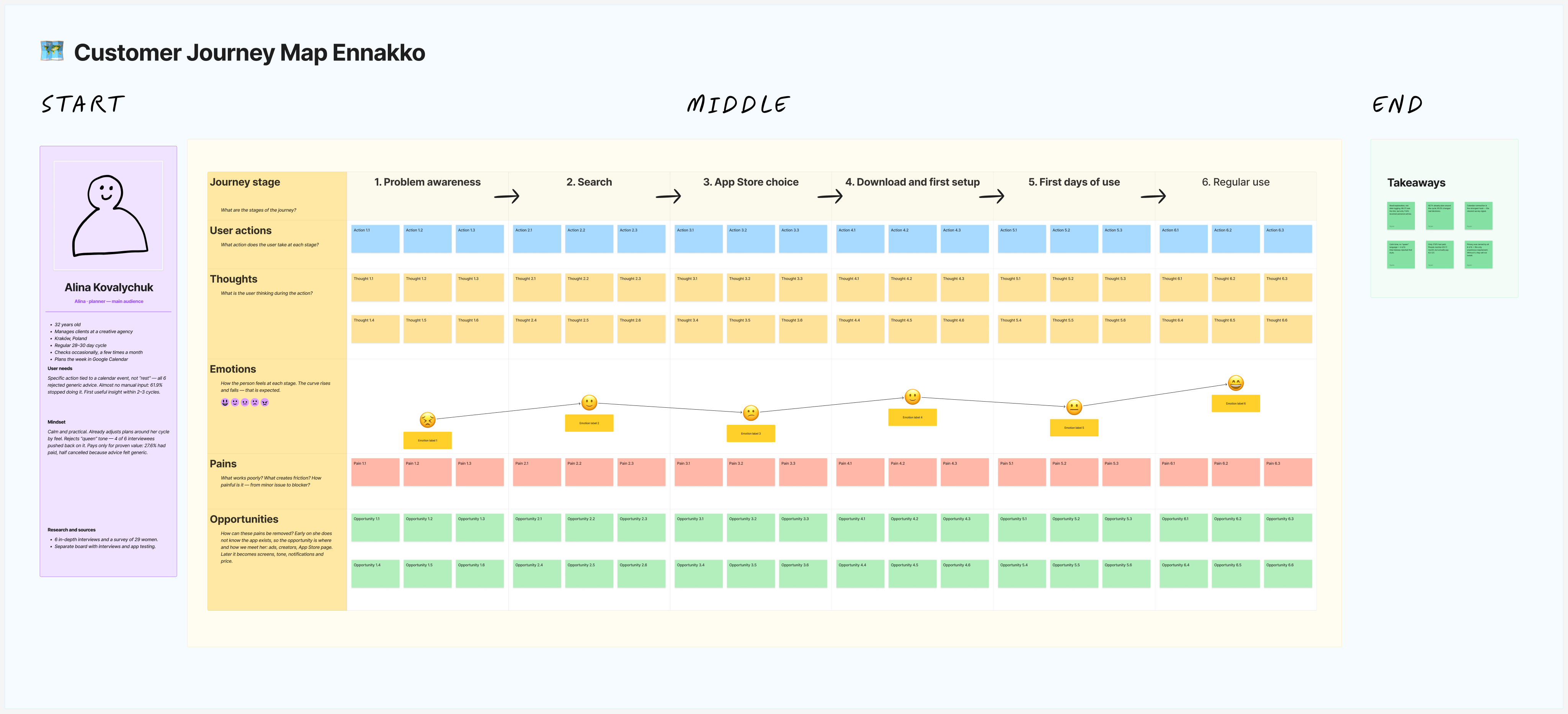
CJM
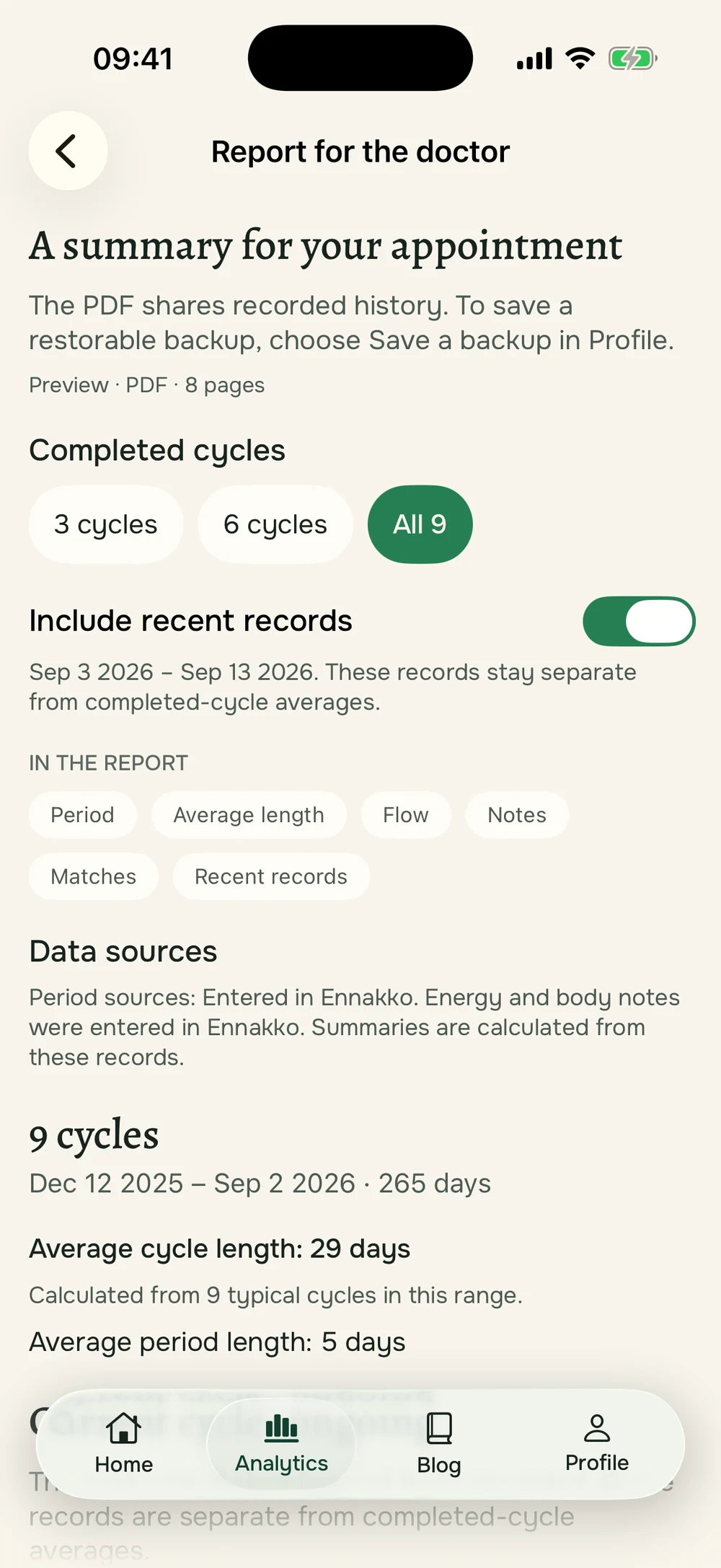
The journey map moved the product toward a quick preview, optional notes and history for appointments.
Research turned into three product decisions
- Before
Required daily logging
WhyForgetting a check-in should not interrupt planning.
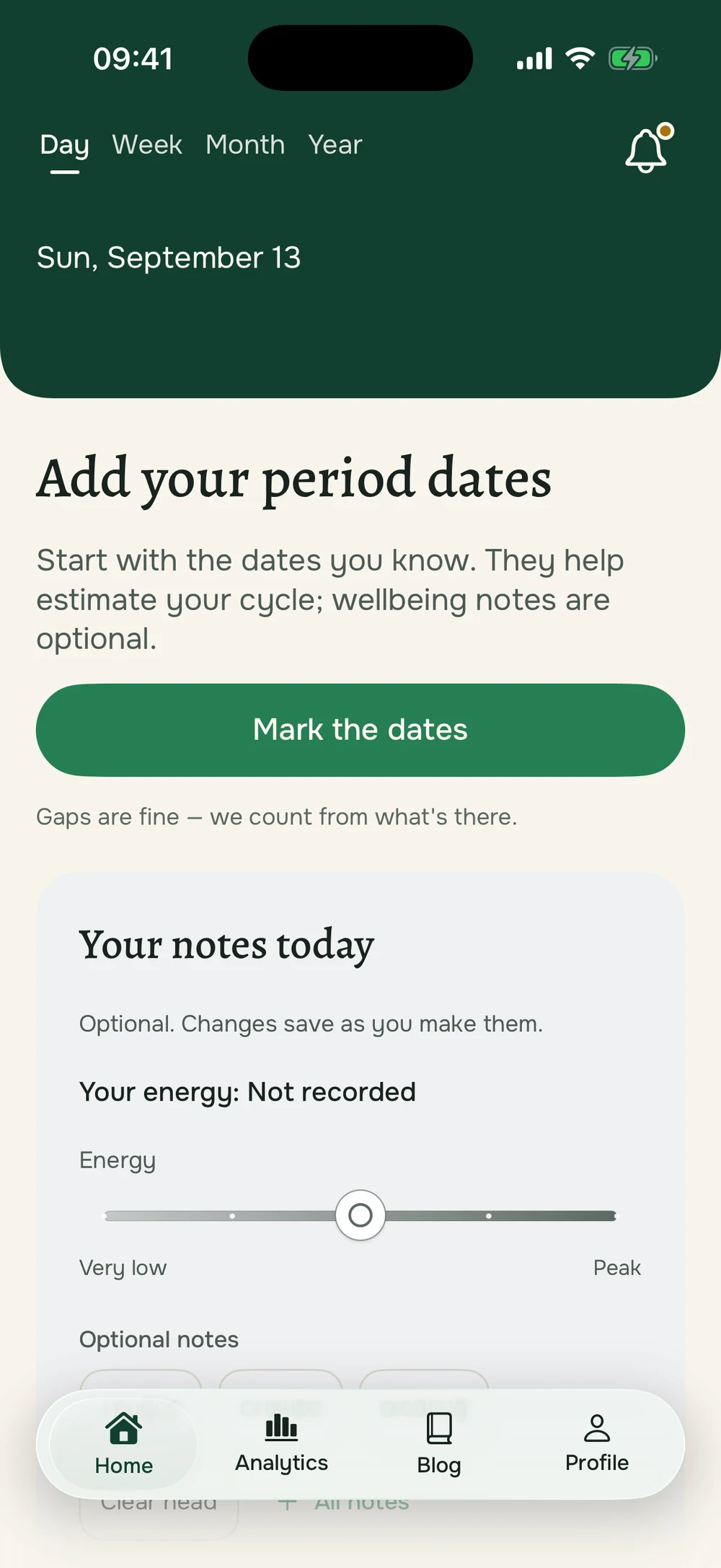
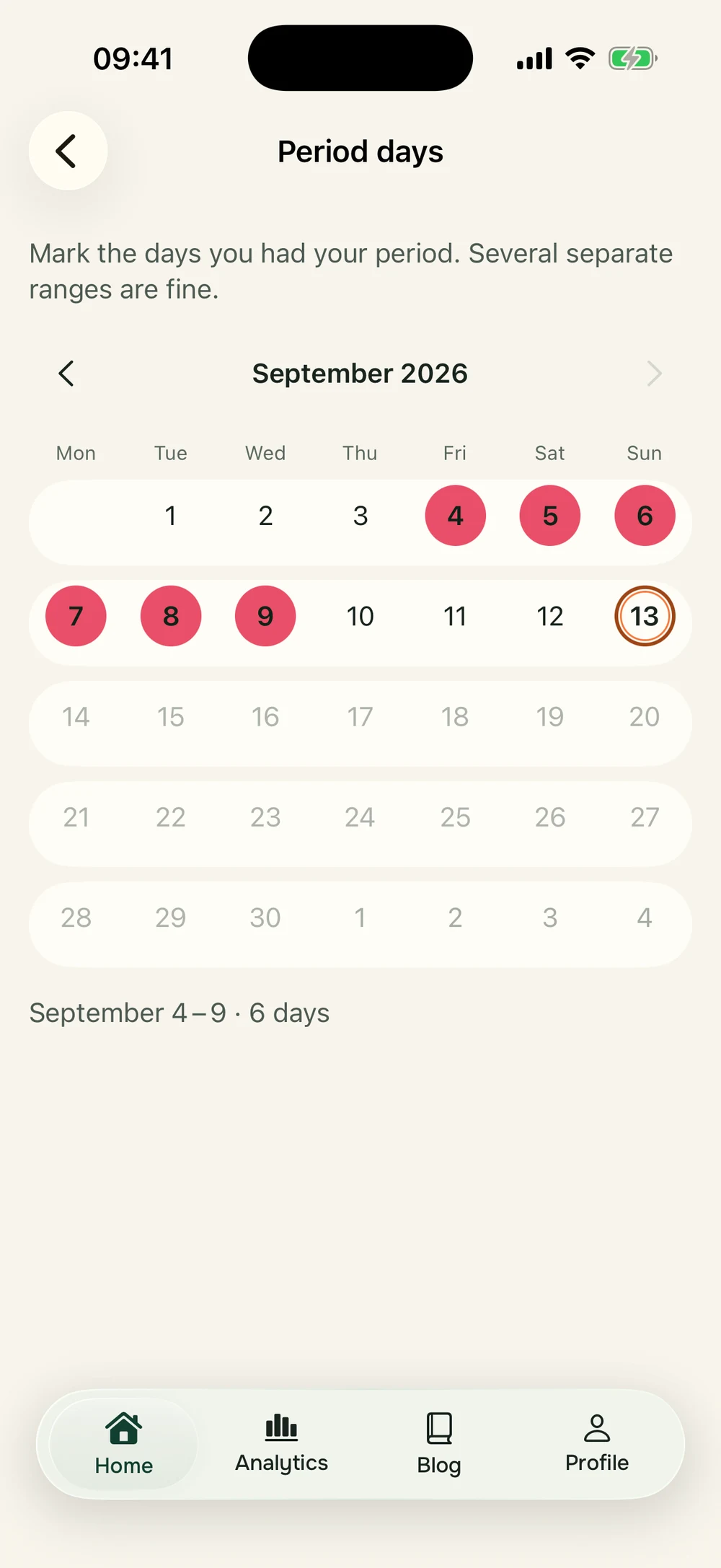
AfterPeriod history with optional notes
- Before
A single predicted date
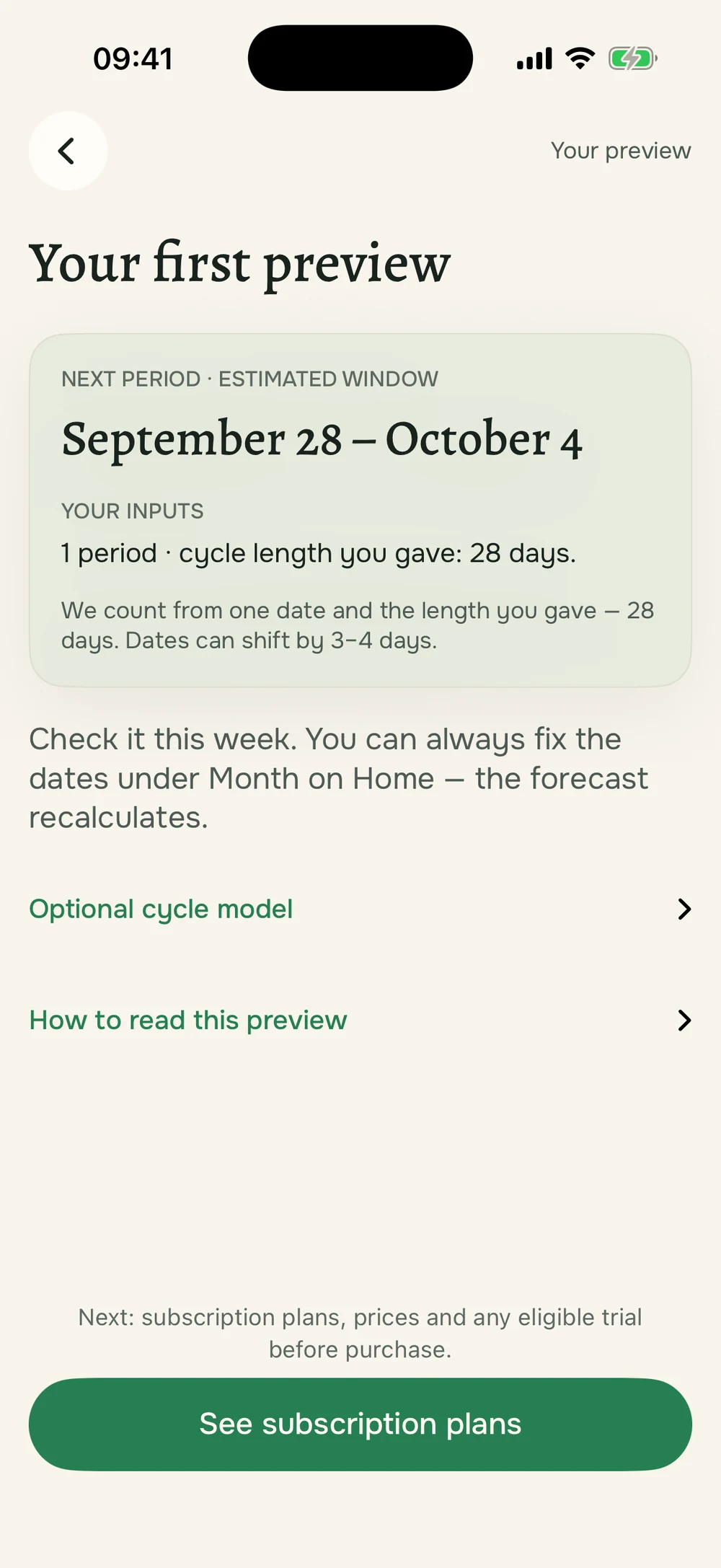
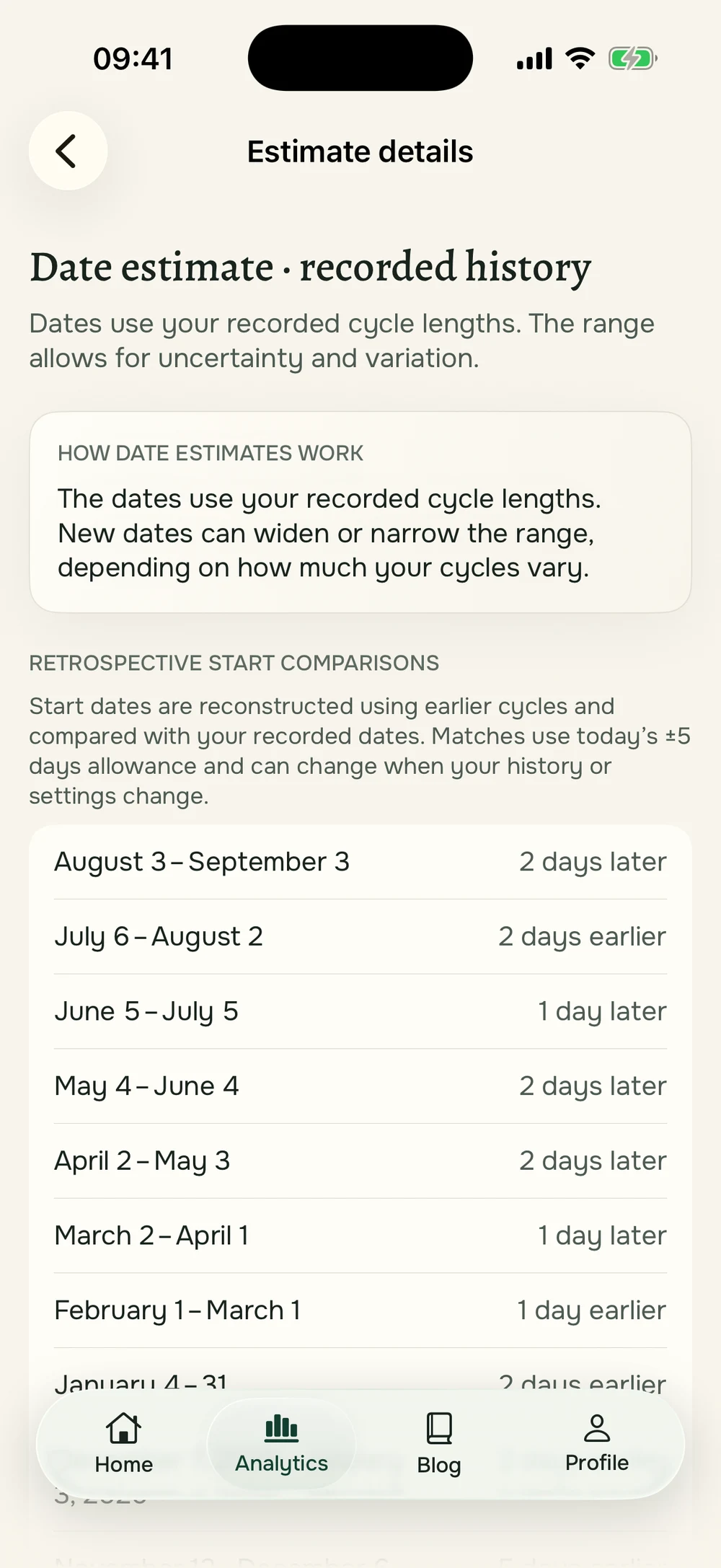
WhyAn estimate needs room for variation and a way to inspect its basis.
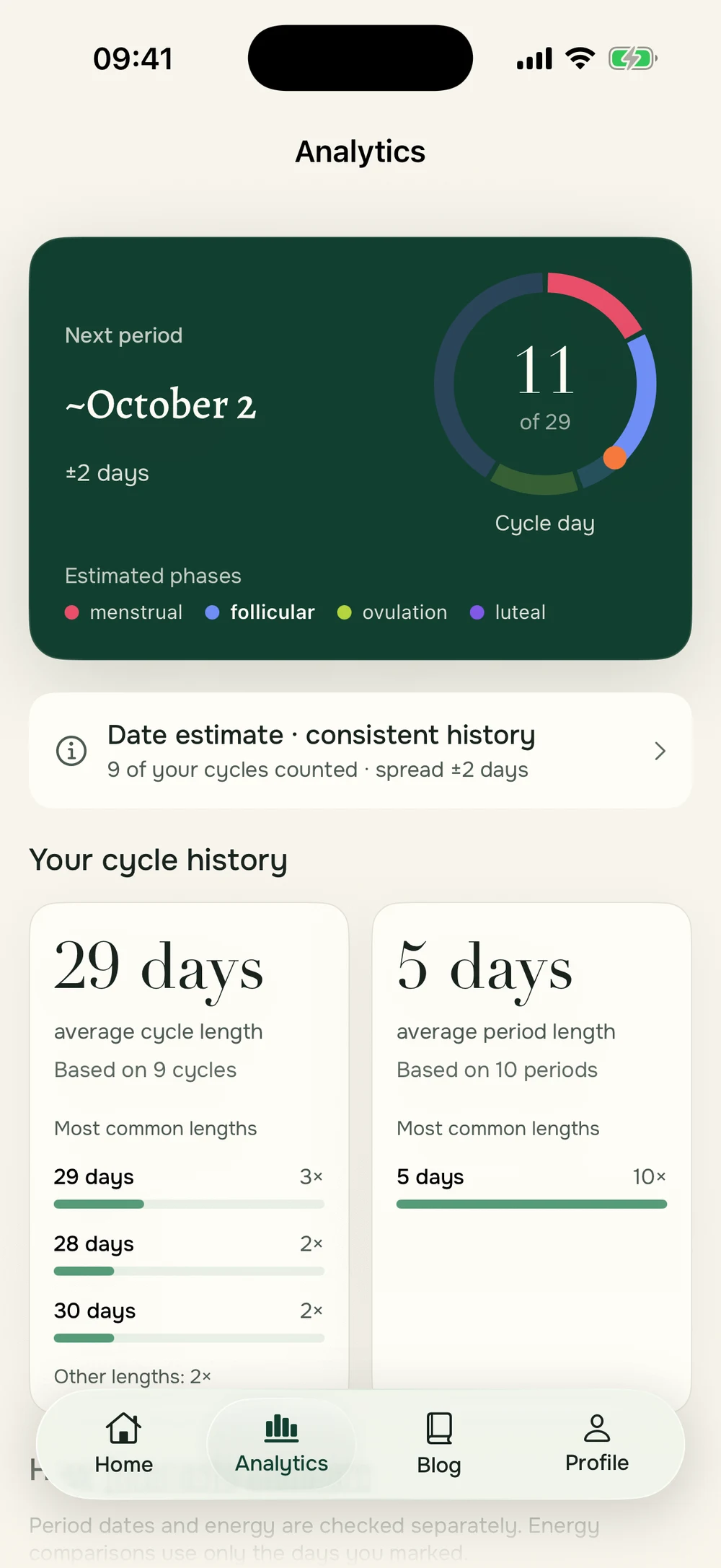
AfterDate windows with recorded inputs
- Before
Separate registration screens
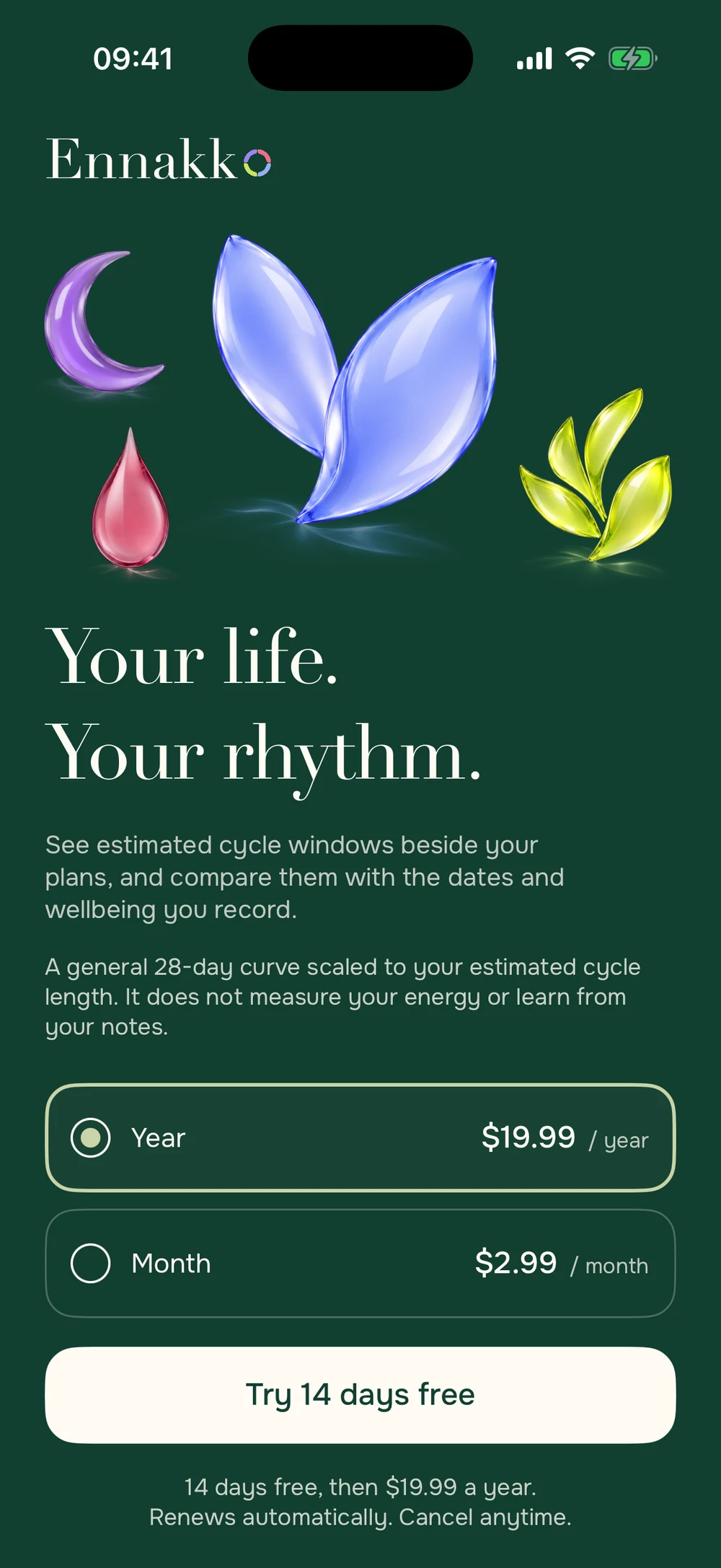
WhyApple handles purchases; processing stays on device and private iCloud sync is optional.
AfterNo Ennakko account

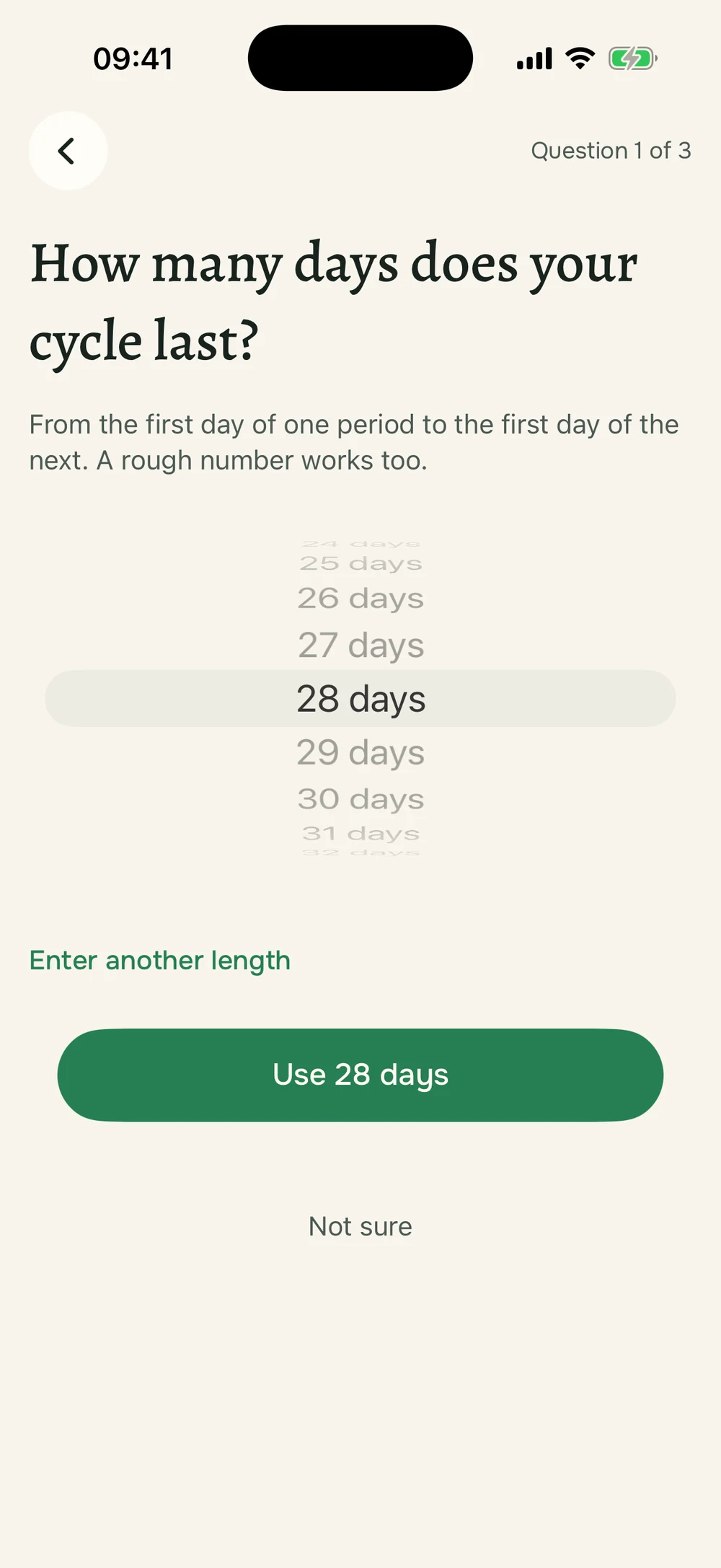
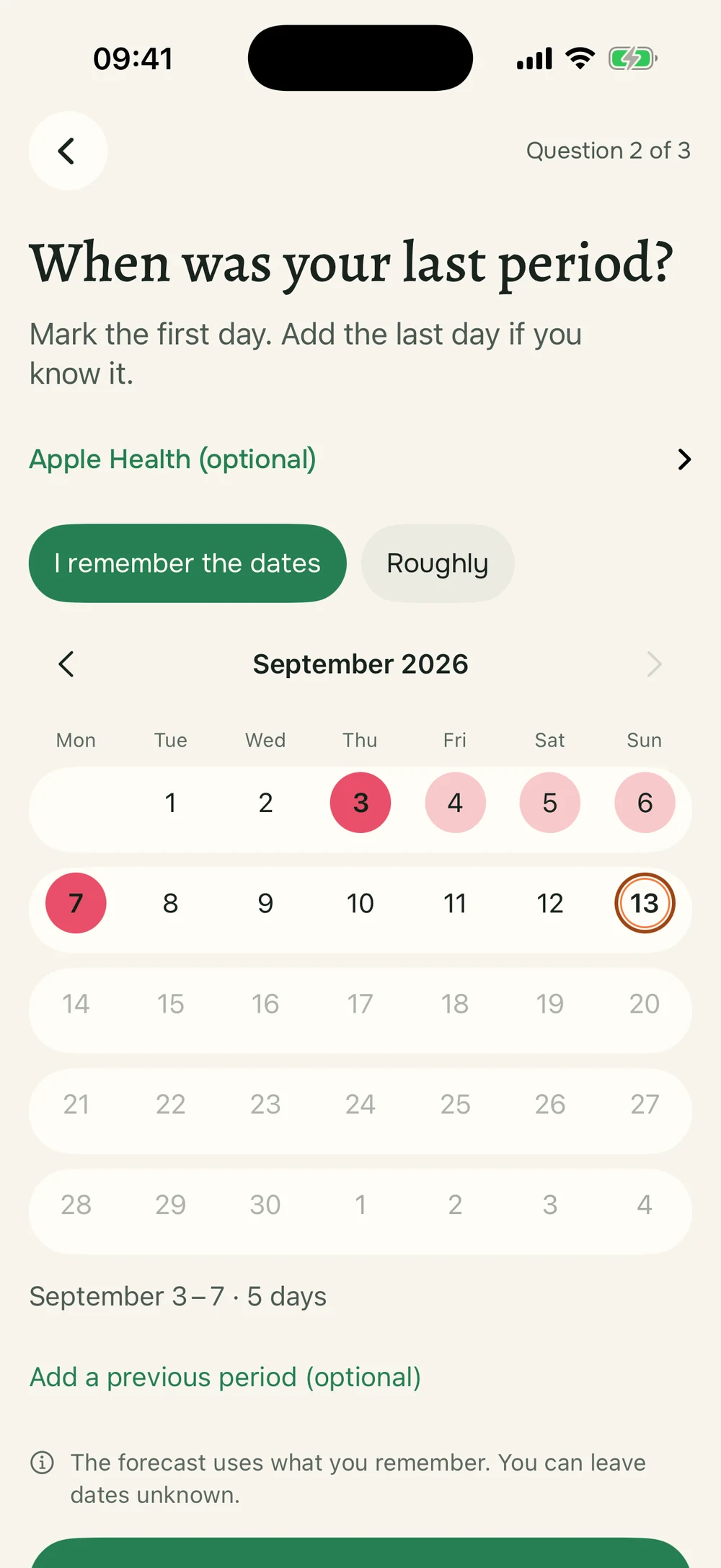
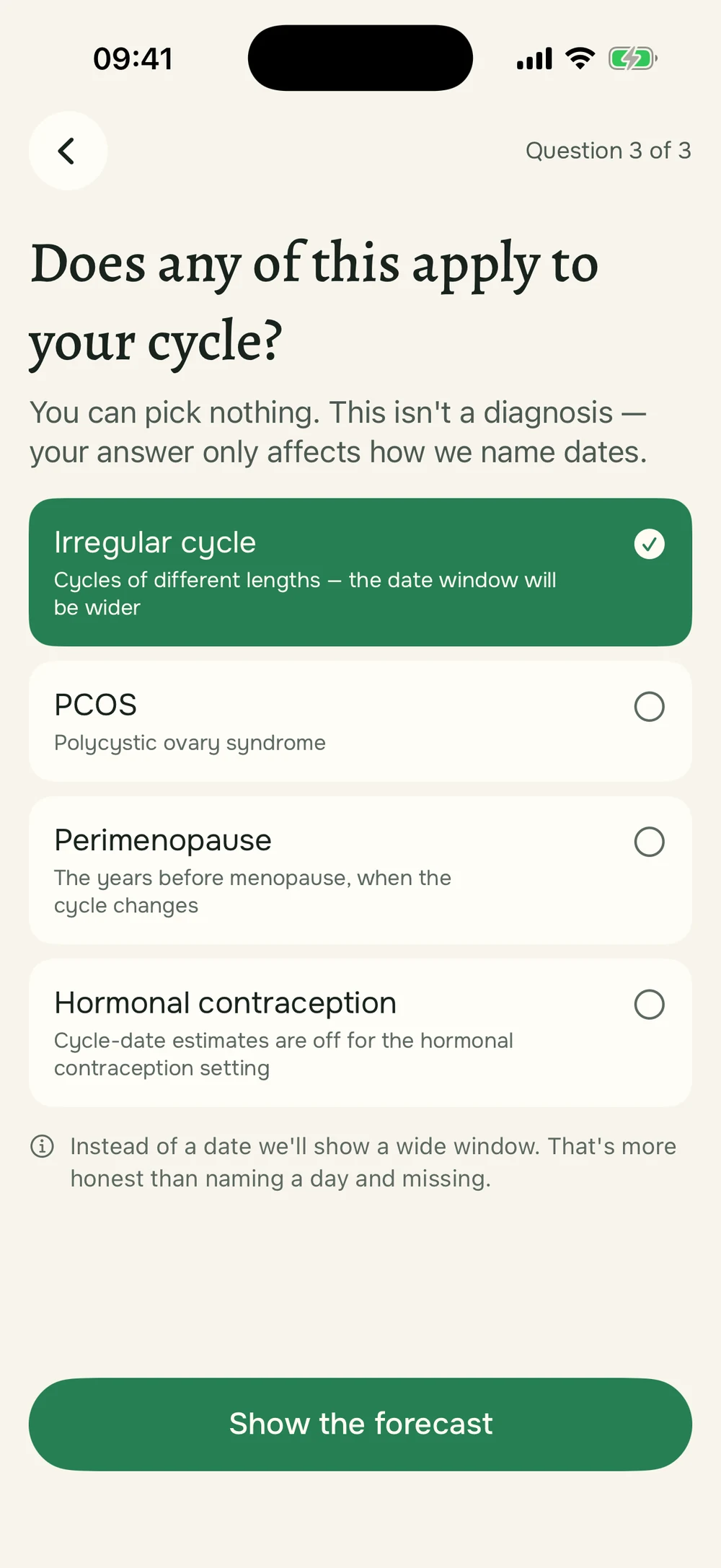
A planning companion, not a diary
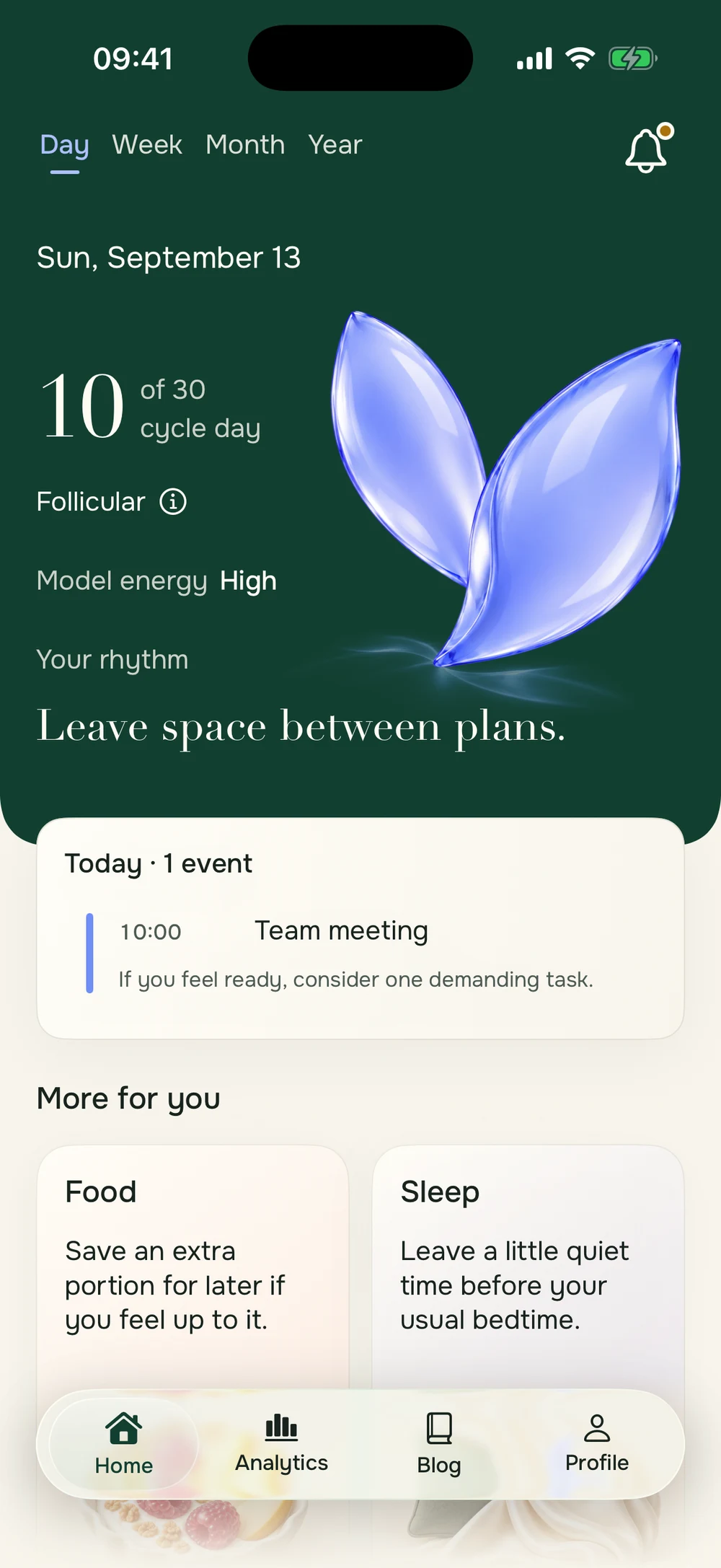
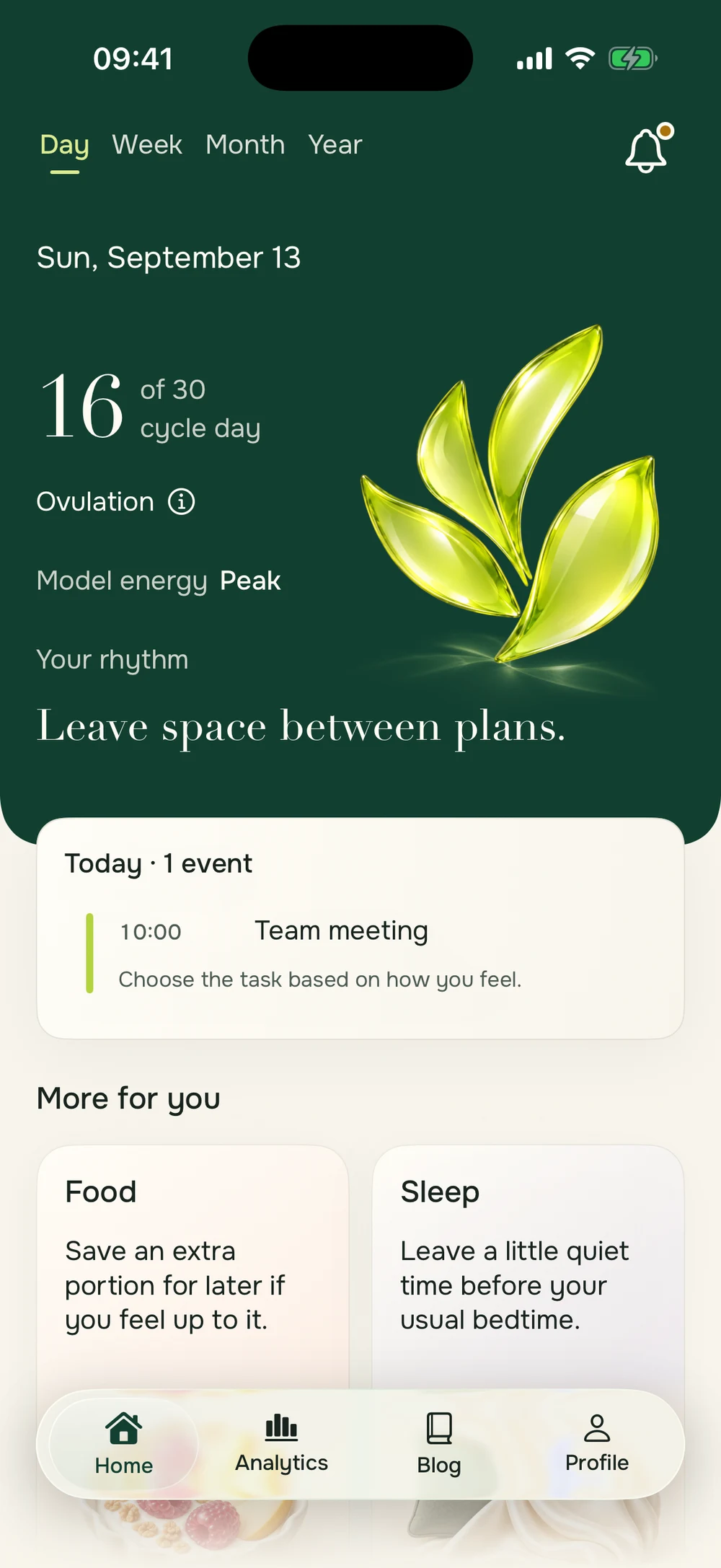
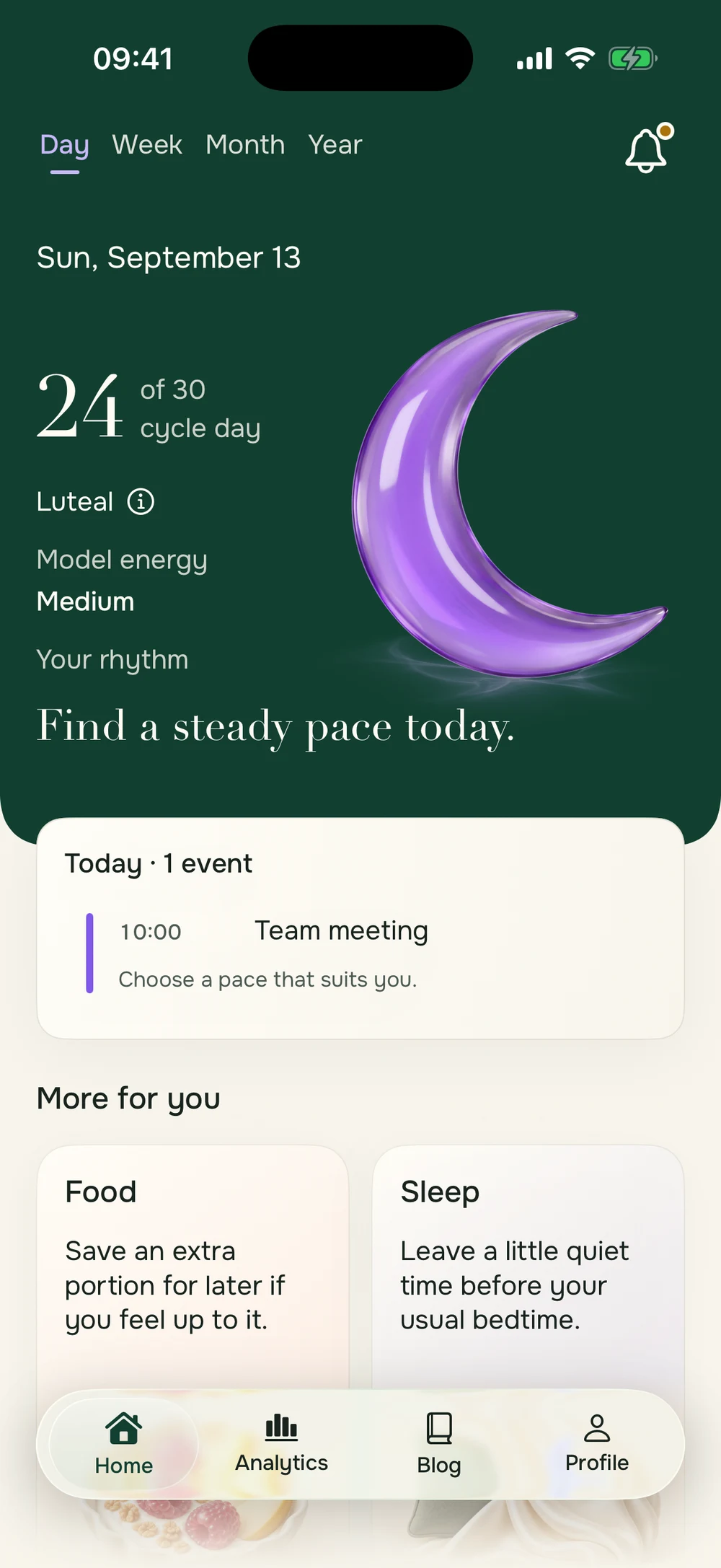
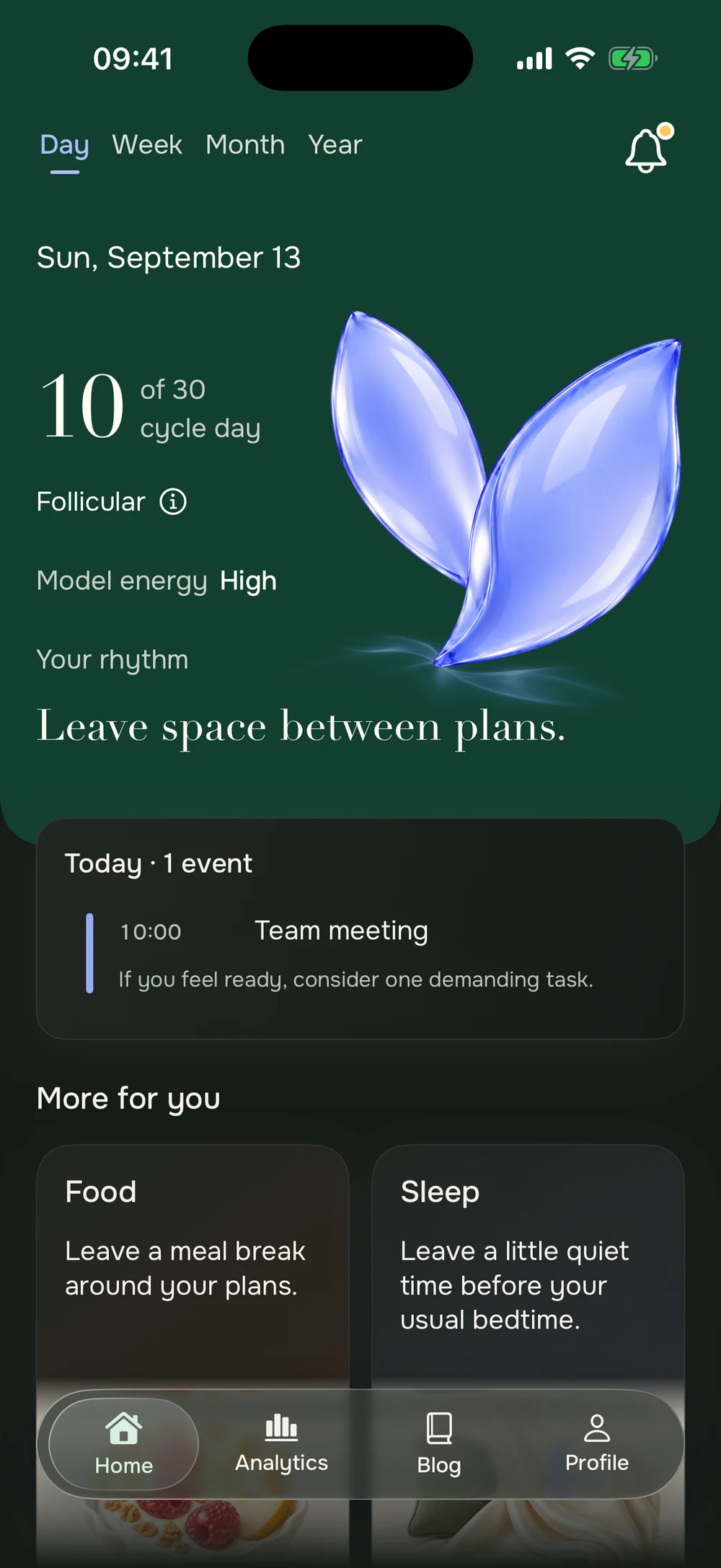
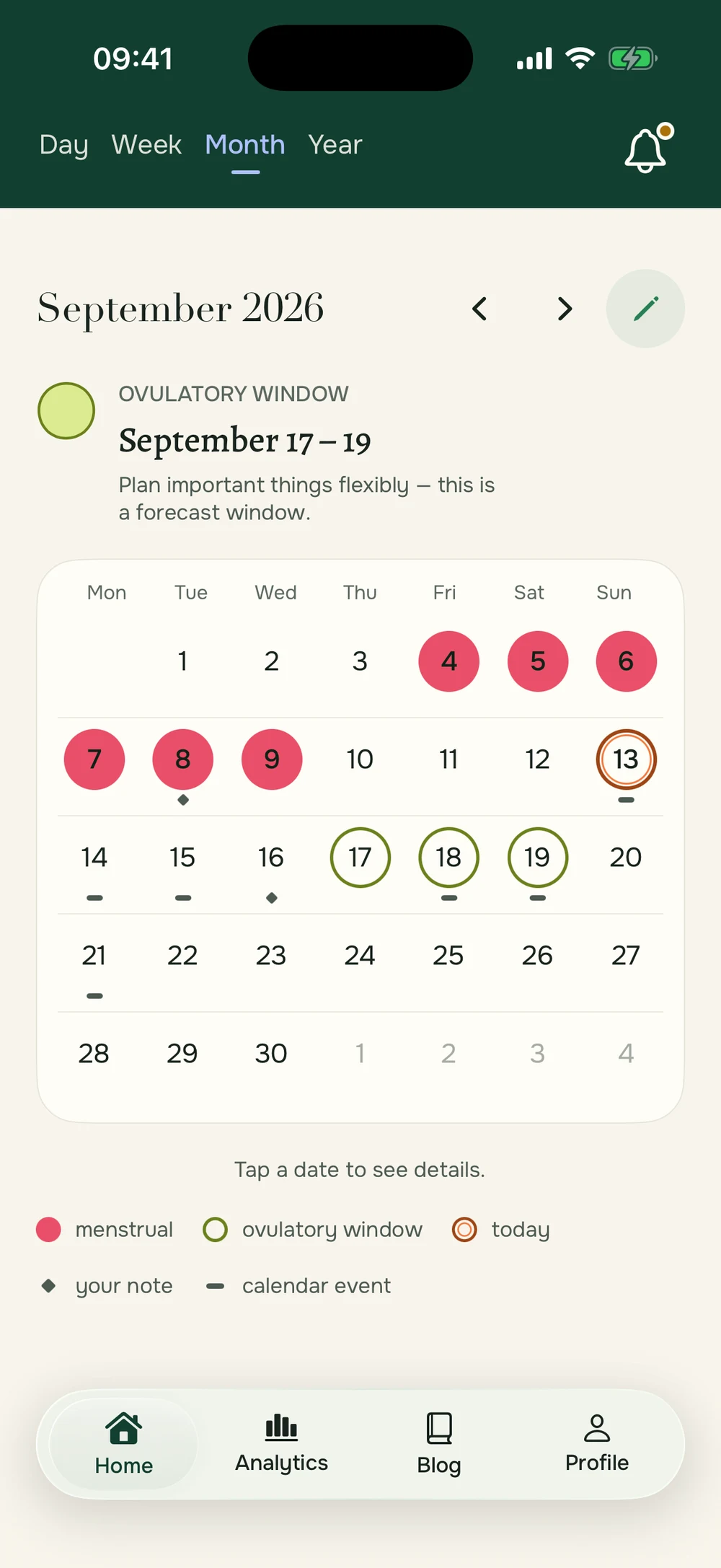
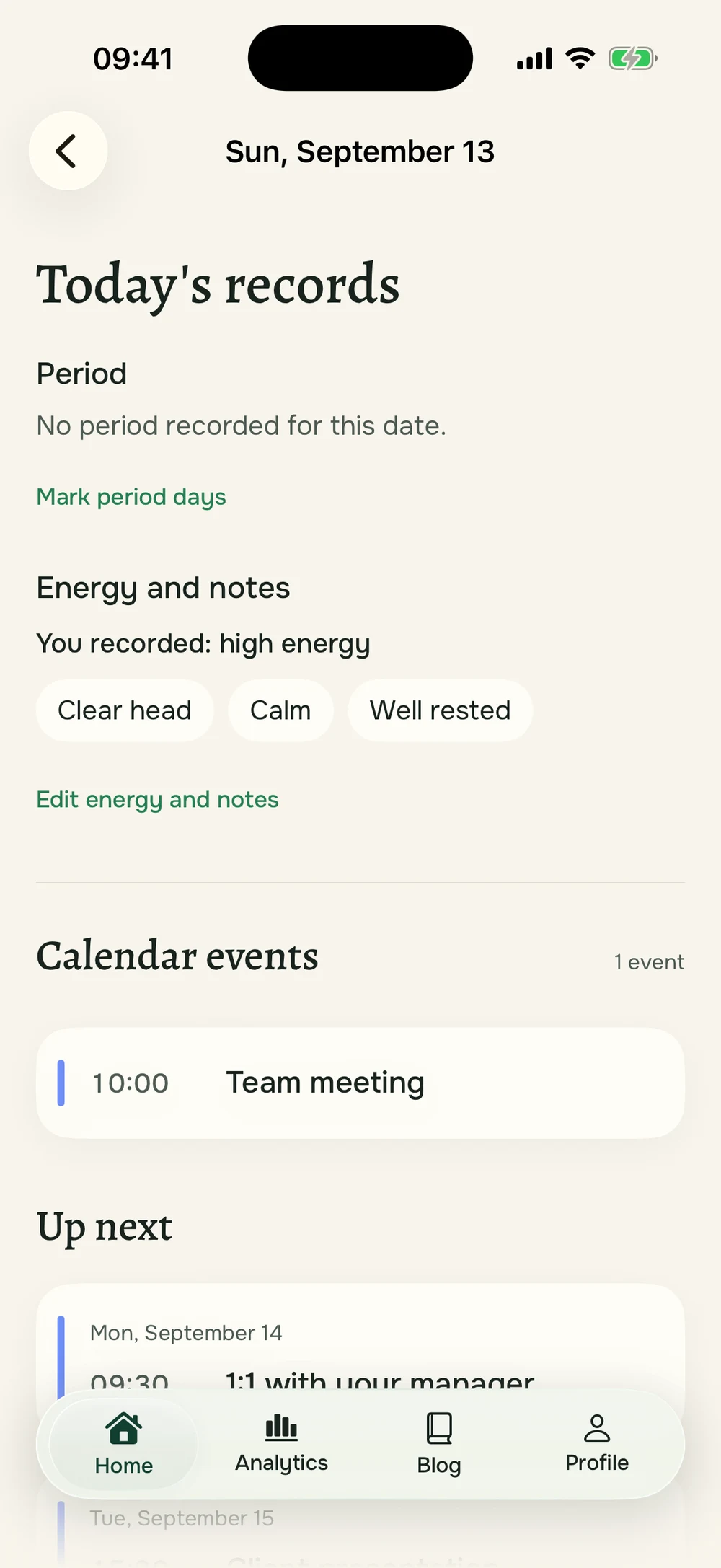
Ennakko gives people a useful preview from remembered dates, keeps daily input optional and makes the model’s limits visible beside calendar context.
The remaining product risk is whether people trust that distinction enough to return before real commitments and consider paying for it.